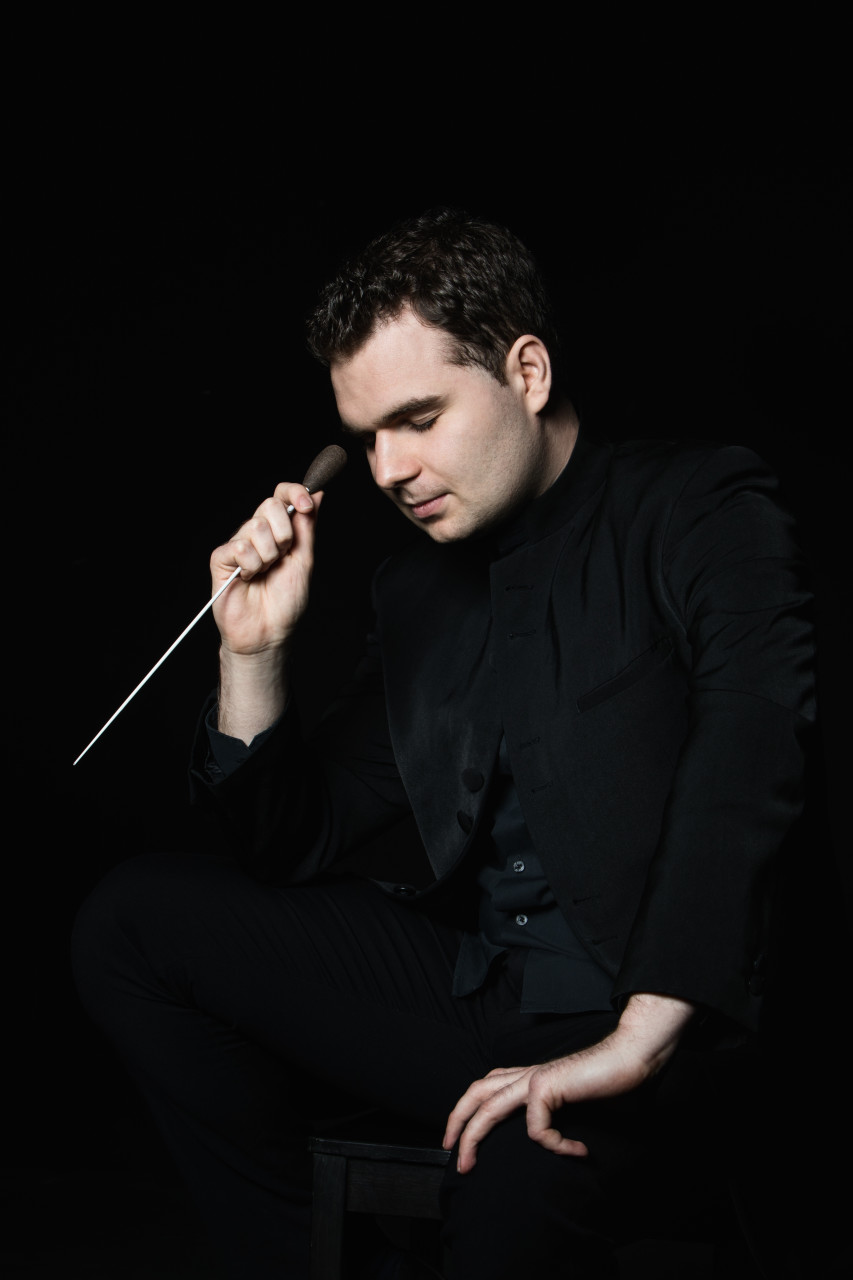
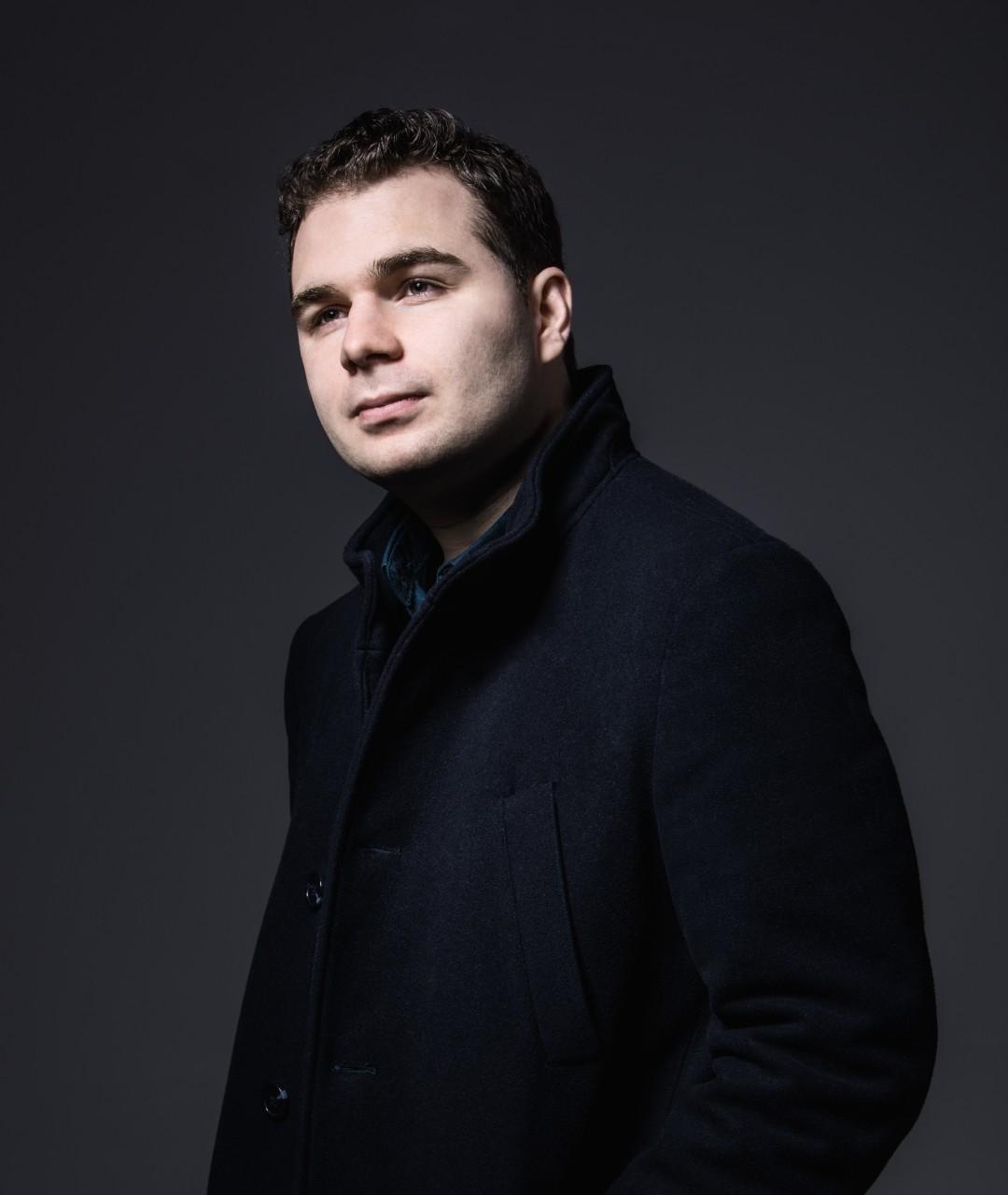
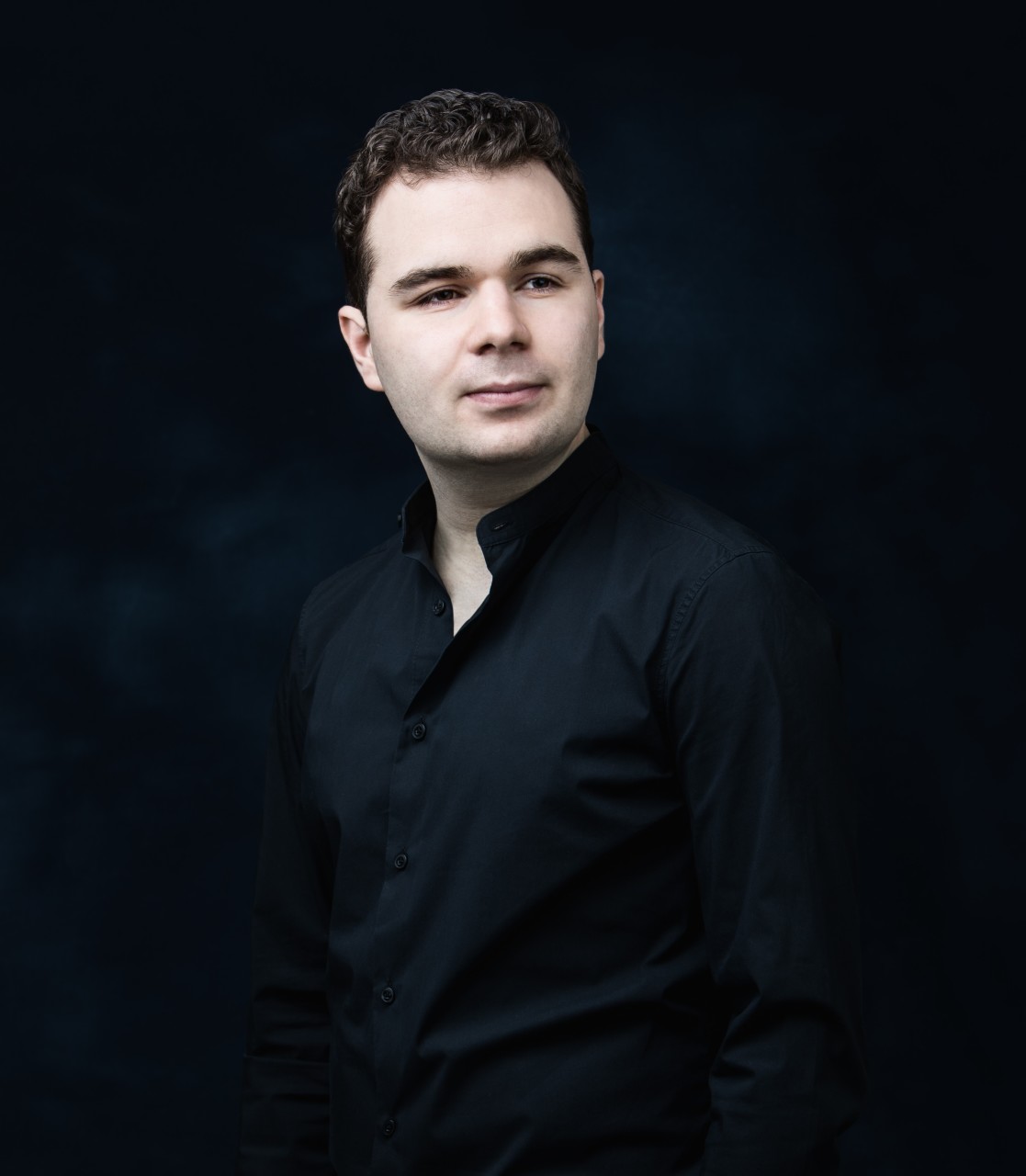
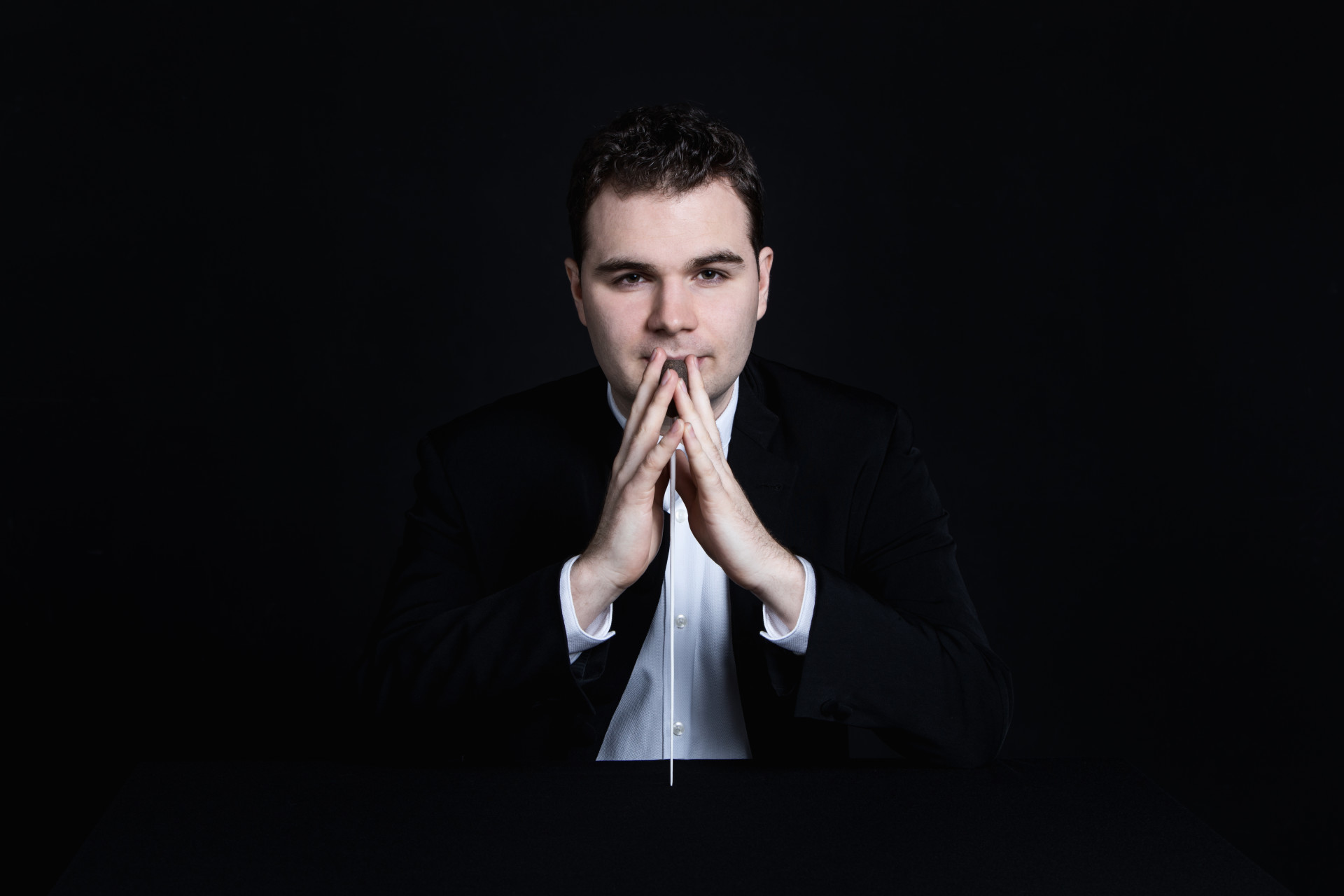
Rising American-Belgian conductor Giulio Cilona is the winner of the 10th Ernst-von-Schuch Conducting Prize 2024 and prize winner at the International Opera Conducting Competition 2022 at the Opéra Royal de Wallonie-Liège. He served as Kapellmeister at the Deutsche Oper Berlin and Principal Guest at the Opera National de Lorraine-Nancy.

The 2026/2027 season will mark Cilona’s debuts at the Teatro alla Scala with Il Barbiere di Siviglia, at the Concertgebouw Amsterdam bringing back to life the rarely performed Fausto (1831) by Louise Bertin conducting from the Fortepiano, at the Opéra National de Paris for a Gala Concert at the Palais Garnier, at the Orchestre Philharmonique de Luxembourg as well as returns to the Semperoper Dresden for a new production of Ferdinando Paer’s Leonora, at the Oper Köln for a new production of Madama Butterfly and at the Norwegian National Opera Oslo for Verdi’s Otello.

His recent symphonic debuts and numerous collaborations with the Konzerthaus Orchester Berlin, Orchestra Nazionale Sinfonica della RAI, Orchestre du Capitole de Toulouse, Gürzenich-Orchester KölnBergen Philharmonic Orchestra, Staatskapelle Weimar, Orchestra del Teatro Regio Torino (FestivalMITO), Teatro Verdi di Trieste and Orchestre des Pays de la Loire were welcomed with exceptionally warm acclaim. He recently also recently performed Beethoven Piano Concerto Nr.2 Op.19, playing and conducting simultaneously from a 1875 Érard Piano d’Époque the Orchestre de l’Opera de Rouen-Normandie on gut strings instruments, a format he will bring next season at the Orchestra Nazionale Sinfonica della RAI during their Beethoven FestivalOther engagements for this upcoming season will include symphonic debuts with the Orchestra Fondazione Haydn, Orchestra Sinfonica di Milano with G. F. Haendel’s Messiah, as well as at the Teatro Filarmonico di Verona and Teatro Petruzelli di Bari.

In the operatic field, Cilona has gathered great recognition with repeated appearances with the Staatskapelle Dresden/Semperoper Dresden (Die Zauberflöte, Le Nozze di Figaro, Don Giovanni), Opéra de Lyon (Charpentier’s Louise), Oper Köln (Nabucco, Hänsel und Gretel), Norwegian National Opera Oslo (Cosi fan Tutte), as well as the Royal Opera House Copenhagen (Cavalleria Rusticana & Pagliacci), Rossini Opera Festival (Cantata: Il Vero Omaggio), Deutsche Oper am Rhein Düsseldorf (Die Zauberflöte), Opéra Royal de Wallonie-Liège (Offenbach’s L’Ile de TulipatanOpéra de Lausanne (Rigoletto), Staatstheater Mainz (P. Maxwell Davies’ Eight Songs for a Mad King and Miss Donnitshorne’s Maggot), Buxton International Festival (La Donna del Lago), and at Teatro Alighieri di Ravenna (Il Barbiere di Siviglia), after the which Cilona was nominated „Revelation 2024” by the Italian critic Pierachille Dolfini.

During his time as Kapellmeister at the Deutsche Oper Berlin, Cilona conducted numerous titles such as Puccini’s Il Trittico, Turandot, La Bohème, Der Fliegende Holländer, Le Nozze di Figaro, Ponchielli’s La Gioconda, Carmen, Rigoletto, La Traviata, Il Viaggio a Reims, Il Barbiere di Siviglia and Die Zauberflöte.

Other notable engagements include a long-term collaboration with the Opéra National de Lorraine-Nancy, with particularly successful productions of Don Pasquale and La Cenerentola and a memorable 5th Symphony by G. Mahler, and a planned return this season for Otello.

Cilona previously worked as a Kapellmeister at the Hannover Staatsoper where he has conducted over 100 performances, including Lydia Steier’s new production of Le Nozze di Figaro (live-streamed on Operavision), Dialogues des Carmélites, Tosca, La Bohème, Così fan Tutte, L’Elisir d’Amore, Hänsel und Gretel and Monteverdi’s L’Orfeo and symphony concerts.

He completed his studies in orchestra conducting at the Mozarteum Universität Salzburg with Bruno Weil and was awarded the Bernhard-Paumgartner-Medaille by the Stiftung Mozarteum in 2019, given yearly to one single exceptionally gifted student of the University. During his studies, he served repeatedly as an assistant and repetiteur for the Salzburg Festspiele.

Cilona also overtook numerous opera performances at the Mozarteum such as Alcina, La Finta Semplice, Les Contes d’Hoffmann, Philippe Boesmans opera Reigen with the Österreichisches Ensemble für neue Musik, and symphony concerts.

He also studied at the Hochschule für Musik, Theater und Medien Hannover and the Koninklijk Conservatorium Brussel, where he graduated with Magna cum Lauda mention in Piano, Conducting and Composition.

As a composer, Cilona premiered his Concertino for Piano with orchestra at age 18, performed several of his works chamber music and solo pieces, most notably in a symphonic concert at the Théâtre Royal de Namur with a total formation of over 200 musicians and choristers.

As a pianist soloist, he performed Gershwin Concerto in F (live-streamed on EuroClassical Planet), Beethoven 2nd Piano Concerto among other piano concertos with orchestra, and was awarded prizes and took part in several piano competitions such as Aarhus International Piano Competition, Concours Andrée Charlier, Prix des Jeunes de Verviers, Concours Rotary Breughel (Flagey Studio 4, Bruxelles) and Concours Cavatine, after which he was offered a recital tour in Morocco at age 11.

As parallel instrumental practice, Giulio studied harpsichord and organ and has a broad interest in historical instrumental practice. He took part as a continuo player in numerous oratorios and baroque operas. Giulio performed on many renowned instruments such as the organs in the Cathedrâle Saint-Nicolas de Genève, the ‘Franz Liszt Organ’ at the Fribourg Cathedral, Basilica San Lorenzo di Firenze, etc. He also studied violin and trumpet in his early years.

Giulio Cilona speaks French, Italian, English, German and Armenian fluently. 


Photos by Barbara Rigon© and Veronica Nika© 

Reviews – Kritik – Recenzioni – Critiques

  • Le Nozze di Figaro, Premiere in Staatsoper Hannover (2022)

   Was Dirigent Giulio Cilona an diesem Abend der Staatsoper Hannover mit Mozarts Figaro an musikalische Warhaftigkeit erreicht hat, das lässt vermuten, dass man einen so guten Dirigenten wohl kaum lange in Hannover halten können. Cilona zeigte ein außerordentliches Gespür für das richtige Pointieren, Phrasieren und Artikulieren dieser Musik. Er spitzte genauso zu, wie er perfekt ausbalancierte. (Cellesche Zeitung, 22.01.2022) 

   Aber nicht nur auf der Bühne werden musikalische Glanzstunden geboten, auch aus dem Orchestergraben tönt es geradezu fantastisch. Dort begeistert Giulio Cilona am Dirigentenpult durch seine außerordentliche Feinfühligkeit, mit der er das Niedersächsische Staatsorchester durch Mozarts Partitur führt. Das Orchester spielt klanglich strahlend und elegant, doch ebenso markant in den Phrasierungen, was bereits in der Ouvertüre deutlich wird und das Publikum auf einen musikalisch wertvollen Opernabend vorbereitet. (Kultur Feder, 24.01)

   Die musikalische Seite der Aufführung besticht maßgeblich durch das souveräne Dirigat von Giulio Cilona. Die Tempi sind extrem schnell genommen. Dabei wird jedweder überzogene Hochdruck oder eine etwaige Atemlosigkeit der Sänger oder Orchestermusiker vermieden. Vielmehr gelingt eine Dynamik in Spiel und Gesang, die die komisch-verwirrenden mit den verstörenden Elementen des Geschehens auf überraschende Weise verbinden. Es ist frappierend zu hören, dass eine solche hohe Meisterschaft von den Solisten und vom Orchester den gesamten Abend über durchgehalten werden kann. Das Niedersächsische Staatsorchester Hannover übertrifft sich hier selbst. (O-Ton, 20.01)

  • Don Pasquale, Premiere at Opera National de Lorraine (December 2023)

   Le chef Giulio Cilona retrouve tout le panache qu’il avait inculqué aux Noces de Figaro à la Staatsoper Hannover début 2022. Le prodigieux dosage de la comédie à travers les tempos traverse l’œuvre d’une multitude de fulgurances, sur un tapis roulant continu de la gestion des équilibres. Accélérations et ralentissements contribuent à une construction virtuose de la précipitation des situations. La pasta instrumentale se forme dans l’émerveillement des caractères et articulations instrumentaux. Le directeur musical obtient d’un Orchestre de l’Opéra national de Lorraine des grands jours – on ne l’avait pas entendu aussi libre, attentif et précis depuis longtemps, avec une légèreté et une pétillance admirables. Ce superbe « pointillisme spaghetti », de continuité et de détail, se pare d’esprit jusque dans le moindre arpège, interprété comme un roulis doublé de tourbillons émotifs. (T. Vicq, Operaonline, 18.12.2023)

   Star montante de la direction d’opéra, protéiforme, le chef Giulio Cilona apporte vigueur et motricité rythmique sans jamais compromettre la précision et la mise en place des ensembles. Un sans-faute auquel contribue l’Orchestre de l’Opéra national de Lorraine par sa plénitude son énergie et sa constante cohésion. (M. Thomé, Res Musica , 18.12.2023)

   À la tête de l’Orchestre de l’Opéra national de Lorraine, le chef Giulio Cilona transmet à cette partition toute son énergie et sa vitalité rythmique, sans gommer la dimension romantique. Le public fait un très chaleureux accueil à ce spectacle éminemment divertissant, pétillant de la première note à la dernière et infiniment rafraîchissant. (P. Delacour, Ôlyrix, 18.12.2023)

  • Il Barbiere di Siviglia, Premiere at Teatro Sociale di Rovigo/Teatro Aligheri di Ravenna (2023)

   La prima componente, assolutamente fondamentale, è la scattante direzione musicale, tutta all’insegna di una visione effervescente del capolavoro rossiniano, che porta in Italia un talento emergente, quello di Giulio Cilona […] Presiedendo anche al fortepiano – è anche un valido concertista […] il giovane maestro belga/americano ci porge una concertazione di prodigiosa teatralità: nitida, luminosa e arguta, ricca di belle annotazioni strumentali, molto attenta al lavoro dei cantanti. (Gilberto Mion, teatro.it)

   Al suo debutto italiano, Giulio Cilona offre una lettura scrupolosa della partitura. Evita ogni contaminazione con gli eccessi della tradizione post romantica e verista, ma non cede nemmeno alla moda del Rossini barochizzato o magari iper-veloce. L’iperbole ritmica viene attenuata, senza per questo rinunciare alla vivacità scattante e al ritmo teatrale; il cantabile risulta disteso e ben assecondato, le simmetrie rossiniane sono rese con nitidezza. Si intuisce una concertazione accurata, che riesce a ricavare il meglio dall’Orchestra Regionale Filarmonia Veneta. Impegnato anche al fortepiano, Cilona contribuisce inoltre a rendere vari ed espressivi i recitativi degli interpreti. Ne esce un Rossini che coglie con spontaneità e misura il passaggio del Barbiere dal Settecento all’effervescenza del nuovo secolo, con fraseggi incisivi, attenzione ai dettagli timbrici, taglio comico ben calibrato e non privo di eleganti aperture liriche. (Roberto Mori, Connessi all’Opera)
